Flowers add to the right tinge of colours and fragrance to our lives, but not every beautiful flower ends up in the bouquets we see at the local florist.Some of these can be silently found in cottage gardens, while others live on the gothic edges of woodland beds, and a few have taken decades of patient breeding just to look the way they do now.If your idea of flowers begins and ends with roses and tulips, there’s a whole world of blooms out there that you may have rarely talked about.Some of these are prized for unusual colours that are so deep that they look almost unreal, while others carry a bit of old folklore or an unexpected surprise hiding behind their name.Here are some black flowers that you may have probably never heard of
Black hollyhock
Despite the name, this old cottage-garden classic isn’t truly black; its blooms are a deep maroon so dark they appear black in most light. Botanically known as Alcea rosea ‘Nigra’, it was already described as black in 1629, looking “of a darke red like black blood.” The flowers grow on tall, unusual spikes that can reach up to 8 feet.
Hyacinth ‘Dark Dimension’
Hyacinth ‘Dark Dimension’ is a velvety, eggplant-purple blooms that darken further as the flowers mature. It only grows about 8 to 10 inches tall, but its fragrance is strong enough to fill an entire room when grown in pots indoors.
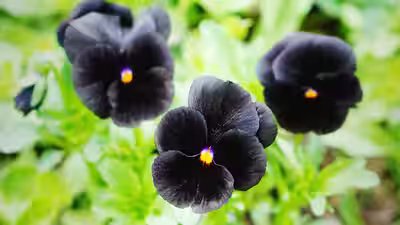
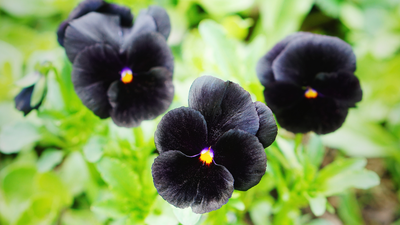
Black pansy
Black pansies are not pure jet black either, but a rich, velvety purple-black with a small golden eye at the centre. This makes them a visible contrast plant in borders, containers, and hanging baskets. They’re compact, growing to just around 4 to 6 inches tall.
Black Baccara
Black Baccara is a hybrid tea rose prized for velvety, near-black buds that open up into deep burgundy-red blooms. Nearly fragrance-free, it grows 3–6 feet tall, produces 40+ petals per flower, and blooms in flushes from spring through fall.
Siberian iris
Siberian iris is native to Europe and Central Asia, and produces elegant, bluish-purple, black flowers with delicate yellow and white markings near the centre, rising above narrow, grass-like foliage. It’s quite low-maintenance, tolerates drought, and can grow in wet soil once established.