
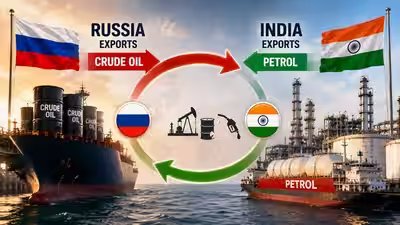
There is a strange irony to the situation. Russia, known to be one of the world’s biggest oil exports and a country among the top 10 with highest crude reserves, is being forced to import petrol. What’s even more interesting is that the gap is being filled by India, among the biggest importers of oil in the world!Russia’s seaborne gasoline imports climbed to a record level of around 125,000 barrels per day (kbd) in August, which would amount to about 470,000 tonnes for the month.Reports suggest that Indian refiners supplied as much as 1 million barrels of gasoline to Russia over the past two months.
Why India has become an important petrol supplier to Russia
India has become an important source of gasoline, or petrol, for Russia as Ukrainian drone strikes on refineries have disrupted domestic fuel production and pushed Russian fuel imports sharply higher, according to ship-tracking data.Energy analytics firm Vortexa said repeated attacks on Russian refineries had disrupted domestic output and contributed to the surge in imports.Russia, despite being one of the world’s largest crude exporters, has been forced to import gasoline after Ukrainian drone attacks on its energy infrastructure caused domestic production to fall by as much as 70%. The resulting shortage has pushed Moscow to bring in petroleum products even as restrictions on fuel sales remain in place across the country.The fuel from India was sourced mainly from the Vadinar refinery in Gujarat, operated by Nayara Energy, which is half owned by Russia’s Rosneft.India shifted significantly towards Russia for crude supplies after 2022, with Russian oil becoming a major source of the crude used to produce fuels such as petrol and diesel.Indian purchases of Russian crude have reached record levels as the conflict in the Gulf has tightened supplies from other sources.The country imported more than 2.6 million barrels per day of Russian crude in June and July, compared with 1 million bpd in February. Russian oil accounted for more than half of India’s total crude imports during the two months.It is possible that some of the fuel shipped from India to Russia was produced using Russian crude.India, Turkey and Morocco supplied gasoline to Russia in August as the country dealt with a widening gap between domestic fuel demand and available supply.Russia extended its complete ban on gasoline exports for both producers and non-producers in July, keeping the restriction in place until the end of January 2027. Its ban on diesel exports was also extended, through September 1, 2026.Vortexa said around 55%, or approximately 260,000 tonnes, of the gasoline imported by Russia in August arrived on sanctioned vessels.“All India-origin gasoline cargoes Russia imported in August were carried on sanctioned fleets and involved dark ship-to-ship (STS) transfers in the Mediterranean,” it said.Overall, about 40% of Russia’s gasoline imports in August were transported through ship-to-ship transfers. Most of these were conducted covertly, with vessels turning off their automatic identification system (AIS) signals.Russian diesel imports and exports have faced a different set of pressures. Diesel exports remain heavily restricted because of the export ban, damage to refineries and disruptions at fuel terminals.Vortexa recorded 32 attacks on Russian refineries during July and August, averaging roughly one attack every other day.Russia’s seaborne diesel/gasoil exports stood at around 150,000 bpd through August 25, according to Vortexa. The figure was broadly unchanged from the previous month but was 610,000 bpd lower than a year earlier and 81% below the five-year seasonal average. Vortexa expects Russia to continue importing some volumes of gasoline in the near term, reflecting the country’s historically lower gasoline-to-diesel production yields.
Sanctions and Tariffs Threat Looms
Meanwhile, the Donald Trump administration is proceeding with Lindsey O. Graham Sanctioning Russia and Iran Act of 2026 which, if passed, would allow the US President to levy tariffs of up to 100% on countries that purchase large quantities of crude oil and gas from Russia, if the Bill becomes law. The authority to decide whether to apply such tariffs would rest with the American President.
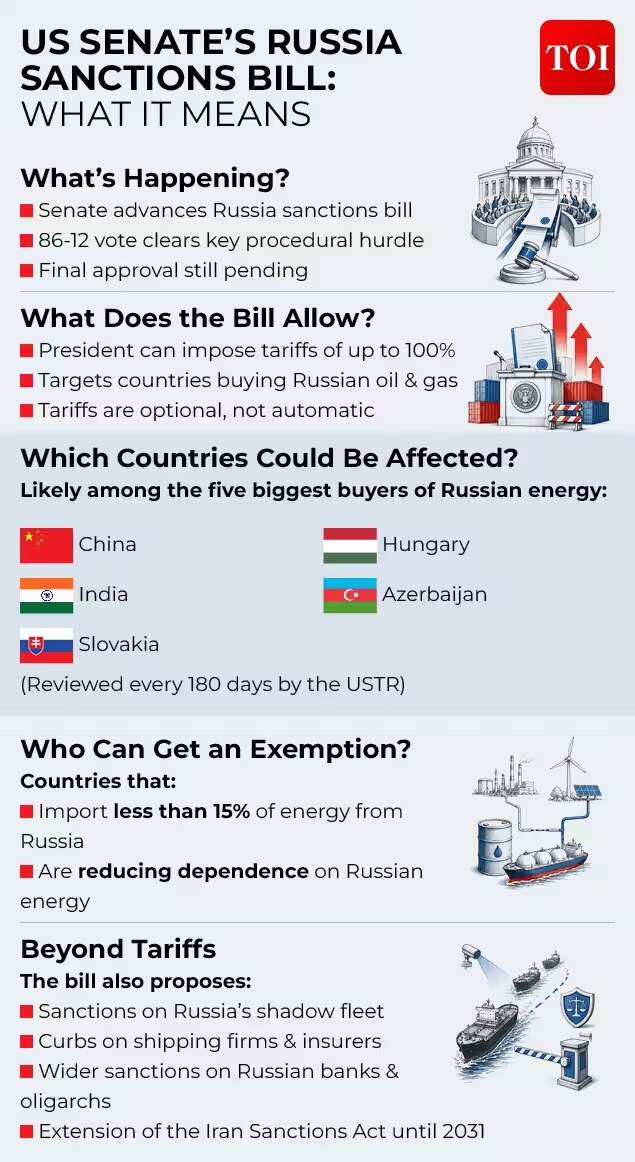
Russia Sanctions Bill: What It Means
Before any tariff decision is taken, the US Trade Representative (USTR) would assess the five countries importing the largest volumes of Russian energy. The review would be carried out every 180 days, after which the US President would determine whether tariffs should be imposed. The Bill provides for both punitive tariffs and exemptions, depending on the President’s decision.Countries that source less than 15% of their total energy requirements from Russia and are taking steps to reduce that dependence could qualify for an exemption. The legislation also proposes secondary sanctions targeting shipping companies, insurers and vessels connected to Russia’s ‘shadow fleet’. The current list of the five biggest importers of Russian energy is likely to include China, India, Slovakia, Hungary and Azerbaijan.The Bill comes as India’s reliance on Russian crude oil has risen to record levels. Russia was not traditionally a major crude supplier to India, but that changed after Moscow’s war with Ukraine began and European countries stopped purchasing Russian crude. Russian oil then became available to India at steep discounts.