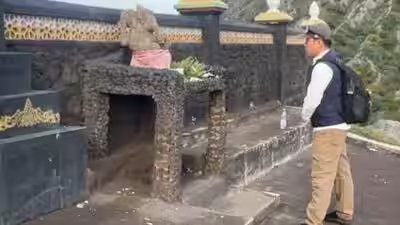
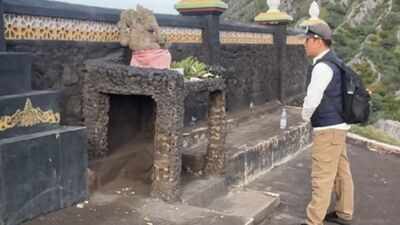
An unusual sight at an active Indonesian volcano has sparked curiosity among Indian travellers. A cigarette being offered to the idol of Lord Ganesha is not an image most India Hindu devotees would associate with temple worship. Yet, at Mount Bromo in Indonesia’s East Java province, such an offering is considered normal. The place is known for its distinctive religious traditions of the Tenggerese people, the Hindu community that lives around this volcanic region.Let’s find out more about this:A Ganesha idol beside an active volcanoMount Bromo is one of Indonesia’s best-known natural attractions, drawing visitors with its vast volcanic caldera, and dramatic sunrise views. Located within Bromo Tengger Semeru National Park, the active volcano rises above a vast expanse of volcanic sand popularly known as the Sea of Sand.Bromo is a sacred landscape for the Tenggerese community, whose religious traditions have roots in the Hindu kingdoms of Java. As per locals, a Ganesha idol near the volcano has stood there for around 700 years. They regard the deity as a protector against volcanic danger and make offerings to seek his blessings. The precise age of the idol, however, is based on local belief rather than a conclusively established archaeological date.Reason behind a cigarette offering
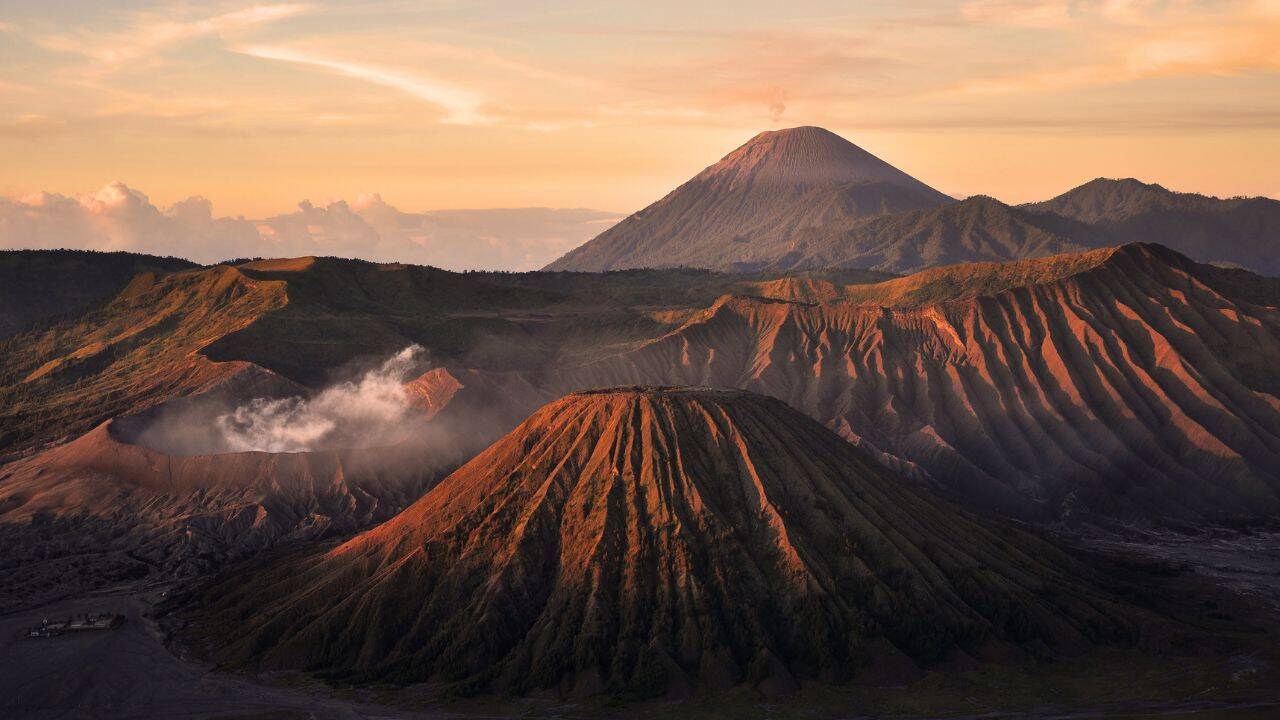
Sacred Mountain in Indonesia (Canva)
Is the cigarette a traditional offering to Lord Ganesha? Well No.However, cigarettes do have a documented place in certain Tenggerese religious and ancestral practices.A 2014 report published by Hinduism Today, based on a visit to the region, describes Tenggerese families placing cigarettes alongside food, money and other provisions during the Entas-Entas ceremony, a ritual honouring the dead. The report also records a local priest explaining that tea, coffee, water, food and cigarettes were offered at his household altar to gods and ancestors.This provides an important cultural clue. In some local traditions, offerings are not limited to flowers, fruit, sweets or incense. Everyday items can also form part of ritual practices, depending on the community, the ceremony and the spiritual significance attached to them.It is important to understand this difference because the religious practices of the Tenggerese are not identical to those followed in every Hindu community in India. Local traditions have developed over centuries here.The living traditions of the Tenggerese
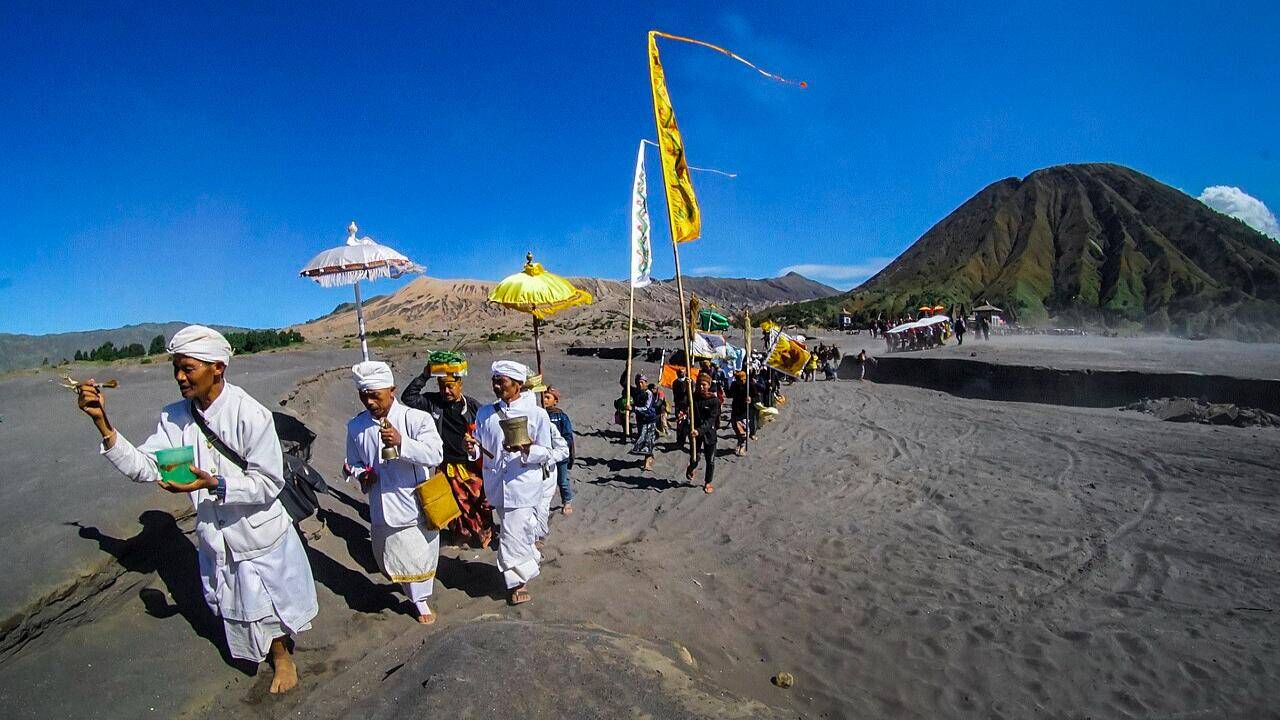
Melasti Suku Tengger Bromo (Wiki)
One of the community’s most significant annual observances is Yadnya Kasada, a ceremony held according to the traditional Hindu lunar calendar. During the festival, devotees gather at Pura Luhur Poten, a Hindu temple in the Sea of Sand at the foot of Mount Bromo, before making offerings at the volcano’s crater.The offerings can include agricultural produce, fruit, flowers and livestock. The ceremony is associated with the legend of Roro Anteng and Joko Seger, the ancestral couple whose story explains the community’s enduring relationship with the mountain.For travellers, the ritual offers a glimpse into a religious culture in which the landscape itself is inseparable from community identity, livelihood and spiritual life.How to reach Mount BromoMount Bromo is reached through East Java, with Surabaya and Malang serving as common starting points for journeys towards the national park.Visitors typically arrange road transfers and local four-wheel-drive vehicles to explore the volcanic landscape. Cemoro Lawang is a popular gateway for access to the Bromo area. The experience usually includes a pre-dawn journey to a viewpoint for sunrise, followed by a visit to the Sea of Sand.The national park requires visitors to book through its official online ticketing system. It is important to follow local access and safety rules. Travellers should also check the latest advisories.The region is not merely a backdrop for gorgeous photographs; it is a living sacred place for the people who call it home.