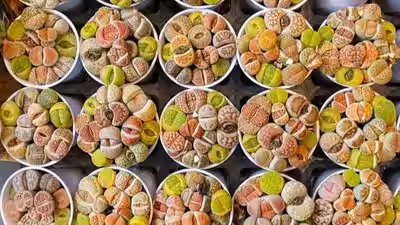
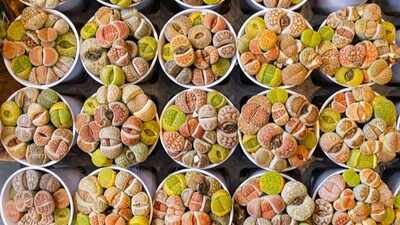
Look closely at a pot of lithops, and you might think someone filled it with small, speckled stones. These plants, known as living stones, are real succulents from the deserts of southern Africa, and they have some of the most unusual survival tricks in the plant world. They hide in plain sight, store water inside their leaves and take in light through tiny windows. Here is what makes them so different from an ordinary houseplant, and how to keep one alive.
A plant in disguise
Lithops grow naturally among rocks in South Africa, Botswana and Namibia. Their stone-like shape and patterned surface blend into the landscape, which helps protect them from animals that might eat their juicy leaves. Each plant is just a pair of thick leaves split by a narrow gap, and most of that is tucked below the soil.
A water tank in miniature
Those fat leaves are built to hold water. The inside is spongy and gel-like, which gives the plant a large reserve to draw on when the desert goes dry. In drought, a lithops may shrink and sink lower into the soil. Because it stores water for months, a little too much watering can do more harm than too little.
Leaves with windows
This is the strangest part. The flat tops of the leaves are translucent, like tiny frosted windows. They let sunlight pass inside, where the green tissue does the work of photosynthesis. Keeping most of the plant underground protects it from the fierce desert heat and glare while still letting it catch the light it needs.
A yearly cycle you need to follow
Lithops don’t grow like normal plants. Each year, the old pair of leaves slowly dries up as a new pair grows from the split in the middle. During this change, the new leaves use the water stored in the old ones, so extra watering can cause splitting or rot. Many growers wait until the old leaves have fully dried before giving water. Daisy-like flowers usually appear from the centre in autumn.
Easy care, if you resist the urge to fuss
Give your lithops bright light, such as a sunny south-, east- or west-facing window. Use a gritty, fast-draining mix, and water deeply but rarely, letting the soil dry fully in between. Overwatering is the main reason these plants die. Good airflow helps, and a closed terrarium is not a good home. Watering advice varies with climate and species, so watch the plant itself. If the leaves look wrinkled in a dry spell, a very small drink may be enough.
Disclaimer:
This article is intended for general informational purposes only. Watering needs and growth cycles can vary depending on the species, local climate and growing conditions. It’s advisable to consult a local nursery or succulent specialist for guidance tailored to your plants.