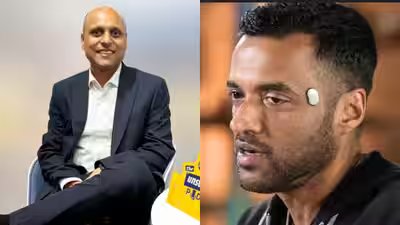
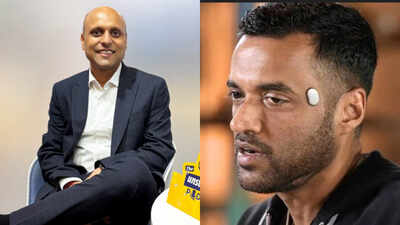
What started out as a tech executive eyeing a shiny new wearable health tracker has suddenly spiraled into a heated online debate over domestic pride, global ambition, and what Indian consumers should expect from their home-grown tech founders.Ankit Aggarwal, the founder and CEO of the Delhi-based talent engagement platform Unstop, was ready to add Zomato founder Deepinder Goyal’s new health device, Temple, to his daily setup. However, he abruptly pulled the plug on his purchase plans.His reason? It wasn’t the eye-watering price tag, nor was it the heavy online backlash the hardware has been catching online. Instead, it was a single, candid remark from Goyal himself: “Temple is not made for India. It’s made for the world.”Taking to LinkedIn to clear the air, Aggarwal laid out why those words made him slam the brakes on his order. He explained that he wasn’t particularly bothered by early bad press or initial skepticism. Like any seasoned tech enthusiast, he was completely willing to wait out the first wave, let real-world user reviews trickle in, and analyze the health data before deciding if the device actually lived up to its bold claims.“The price & backlash didn’t bother me. But I didn’t after reading Deepinder’s Diwali post,” Aggarwal wrote, stressing that his sudden change of heart was a personal choice rather than a call for everyone else to boycott the brand.
Why the “Global-First” Tag Stung
Aggarwal’s frustration stems from a pretty straightforward question: Why would an Indian startup – built by Indian founders, fueled by local venture capital, and developed right here – publicly treat its own home market as an afterthought?He pushed back hard against the notion that Indian consumers aren’t ready for premium health tech. Global heavyweights like Apple and Whoop certainly don’t think so. Whoop officially made its grand entry into the Indian market back in 2024, and Apple continues to sell massive quantities of its high-end Watch Ultra series to health-conscious Indians who have no problem dropping serious cash on high-tier gear.To Aggarwal, the demand is glaringly obvious. The pre-orders for Temple were coming in, Indian content creators and top-tier athletes were already hyping it up, and prominent local investors were backing the venture. The audience was right there, cash in hand.So, when the founder of the company turns around and implies that the local market barely matters in the grand scheme of things, Aggarwal sees no reason to bend over backward to support it just out of some misplaced sense of national pride.
What Goyal Actually Said
The entire controversy traces back to a post shared on X (formerly Twitter) by Deepinder Goyal on November 8, where he tried to address the growing internet noise around Temple’s steep price point and niche positioning.Defending the strategy, Goyal made it explicitly clear that the wearable was engineered primarily for western and global markets, estimating that India would likely make up less than 1% of the product’s overall sales volume.“Temple is not made for India. It’s made for the world,” Goyal bluntly stated.He went a step further, asking buyers not to purchase the device just to support an Indian startup. Goyal insisted that the company wants to compete purely on merit on the global stage, rather than relying on nationalist sentiments to drive domestic sales. Addressing the backlash over pricing, he argued that immense R&D had gone into building the hardware, and the company stood firmly by its valuation of the product.
Taking the Founder at His Word
For Aggarwal, the argument over whether Temple is actually a revolutionary piece of tech or just an overpriced gimmick is pretty much beside the point now. He’s taking Goyal’s marketing pitch at face value, and opting out entirely.“If Temple is not made for India, I will take him at his word. I won’t buy it, and I won’t endorse it,” he concluded.Aggarwal’s public stance hits on a delicate nerve within India’s booming startup ecosystem. While there’s certainly nothing wrong with Indian companies harboring massive global ambitions, it raises a tricky question: Can a home-grown startup shoot for global dominance without making its very first home market feel like an unwanted afterthought?