
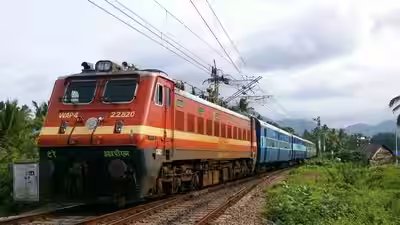
Long-distance train journeys can sometimes be cumbersome especially on account of cleanliness in trains. The Railway Board has recently prepared a plan to tighten supervision and intensify cleanliness measures on long-distance trains that take more than 40 hours to complete their journeys.Officials have said that 11 trains have been selected under the initiative, with staff required to take photographs of coaches and toilets bearing time stamps at the starting station, destination and specified inspection points along the route.
Long-distance trains in focus
The depots responsible for these trains will closely track cleanliness and maintenance, while zonal railway officials will review passenger complaints and the action taken to resolve them every week, they said.The performance of agencies providing on-board housekeeping services will also be evaluated based on complaints lodged through Rail Madad, the Railways’ official digital platform.“The on-board housekeeping staff in these trains will be trained to take up small repairs. Dedicated teams comprising plumbers, electrical staff and other requisite maintenance personnel may be deployed en route these trains to speedily address concerns,” a senior official recently told ET. The official added that cleaning at designated ‘clean train station’ points would receive particular attention.“Divisions have been asked to ensure adequate manpower, equipment and consumables,” the official added.The 11 trains covered by the plan are Jhelum Express, Pune-Saharsa Express, Amritsar Garib Rath Express, Avadh Assam Express, Howrah-Yesvantpur Express, Vivek Express, Danapur-SMVT Bengaluru Express, Amrapali Express, Ahmedabad-Saharsa Express, Rajgir-Lokmanya Tilak Terminus Express and RKMP-Agartala Express.
Indian Railways bets on waste disposal
Indian Railways has put in place a comprehensive system to collect, process and dispose of waste generated at railway stations and aboard trains. Stations have been equipped with twin dustbins to facilitate waste collection and segregation at the source.Waste produced during train journeys is gathered at designated waste-handling stations at regular intervals. These stations have arrangements with Urban Local Bodies and municipal authorities to ensure its proper disposal.Depending on operational requirements, Indian Railways has also installed waste-processing facilities at various stations, including biogas and composting plants, as well as plastic bottle-crushing machines.Following the applicability of the new Solid Waste Management Rules, 2026, and directions issued by the Supreme Court, the Railways has undertaken several initiatives to strengthen waste management across its establishments.The Railway Board has issued a Standard Operating Procedure (SoP) for solid waste management across railway stations, trains, railway colonies, hospitals, workshops, production units and other railway establishments. The guidelines lay down procedures for waste segregation, collection, transportation, processing and scientific disposal. They also specify monitoring arrangements and clearly define responsibilities at different levels of the administration.Zonal Railways have begun identifying units that fall under the category of bulk waste generators as defined by the SWM Rules, 2026. An “As-is Waste Characterization and Quantification Study” has also been planned to evaluate the existing volume and composition of waste generated across Indian Railways’ establishments and trains.Dedicated nodal officers have been appointed by Zonal Railways to draw up comprehensive waste management plans, carry out periodic audits, oversee implementation and submit regular compliance reports to the Railway Board. Divisions have also been instructed to formulate their own action plans to improve waste management. In addition, dedicated Environment & Housekeeping Management (EnHM) departments have been set up at the divisional, zonal and Railway Board levels to oversee waste management-related issues.To maintain cleanliness and hygiene throughout train journeys, Indian Railways provides on-board housekeeping services (OBHS) on 1,450 pairs of identified long-distance trains.The Clean Train Station (CTS) scheme is operational at 63 stations and covers 2,800 trains. Under this arrangement, dedicated teams equipped with cleaning equipment use the scheduled halts to clean coach toilets and washbasins and remove garbage from dustbins inside the trains.