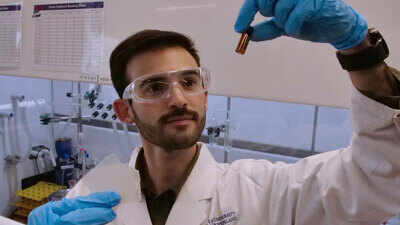
What if a material that was once considered too brittle for commercial use could find a new purpose in medicine? Researchers at Australia’s University of Queensland (UQ) have found a way to transform a bio-derived plastic into a water-absorbing hydrogel that could eventually find applications in wound recovery, tissue engineering and drug delivery.The development offers an interesting possibility for sustainable medical technology: instead of discarding promising bioplastics because of their physical limitations, scientists may be able to modify their structure and give them entirely new applications.The research, announced by the University of Queensland, was led by PhD candidate Cole Walchle from the university’s School of Chemical Engineering. His work involved modifying an existing bioplastic to create a new gel-like material with the potential to serve several medical and industrial purposes.
How researchers transformed brittle bioplastic into a medical gel
The starting material was poly (3-hydroxybutyrate), commonly known as PHB. It is a bio-derived and biodegradable polymer that has attracted scientific interest as a possible alternative to conventional petroleum-based plastics.However, one major limitation has restricted its wider commercial use: brittleness.To overcome this challenge, Walchle experimented with a technique called polymer grafting, which involves attaching one type of polymer to another to modify its physical properties.Using gamma radiation, he grafted N-hydroxyethyl acrylamide (HEAA), a polymer commonly used in hydrogel preparation, onto PHB. The process produced a new material called P3HB-HEAA, which demonstrated a strong capacity to absorb water while offering improved mechanical properties.Explaining the significance of the work in the University of Queensland’s official announcement, Walchle said: “We’ve basically created something that is simultaneously tougher than the materials we had to begin with, yet also particularly good at absorbing water.”He added that the material combines the sustainable origins of a bioplastic with a considerably wider range of potential applications.
From wound recovery to drug delivery: What could the hydrogel do?
Hydrogels are materials capable of absorbing and retaining substantial amounts of water. Their properties make them useful in several biomedical applications, including wound dressings, tissue engineering and controlled drug delivery.The newly developed P3HB-HEAA material could potentially be explored for similar purposes.According to the University of Queensland, its possible applications include surgical settings, wound recovery, slow-release drug delivery, hygiene products and specialised coatings or lubricants.The material’s ability to absorb water is particularly relevant to its potential biomedical applications. Researchers are interested in developing materials that can interact with biological environments while offering the physical characteristics required for medical use.However, the hydrogel is still at the research stage. Its potential applications should not be confused with established medical treatments or commercially available products.
Why this research matters for sustainable medical technology
The study addresses a broader challenge in materials science. Although naturally derived plastics offer an alternative to petroleum-based materials, their physical limitations often make large-scale commercial applications difficult.Walchle believes modifying existing bioplastics could help overcome some of these barriers.In the university’s announcement, he said: “Our work demonstrates that there is scope to tweak them to create new, sustainable products that work for us now.”There is, however, an important question that researchers still need to answer: will the newly developed material retain the biodegradability of its original polymer?Walchle said further investigation would be necessary to understand the material’s behaviour, particularly its ability to break down naturally.The research was conducted at the ARC Training Centre for Bioplastics and Biocomposites, with contributions from several University of Queensland researchers and support from the Australian Nuclear Science and Technology Organisation (ANSTO), which assisted with gamma irradiation experiments.Published in Macromolecular Rapid Communications, the research highlights how modifying existing materials can open up possibilities that were previously difficult to imagine.For now, the hydrogel remains a promising laboratory development rather than a ready-to-use medical product. But the work points towards an important direction in materials research: creating sustainable alternatives that are not only environmentally conscious but also capable of performing specialised functions in healthcare.