
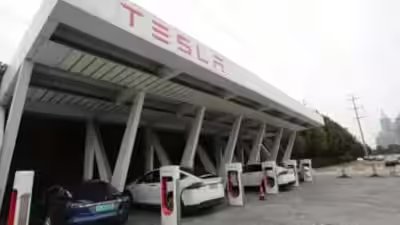
Tesla and eight Chinese automakers are recalling about 4.3 million vehicles in China after regulators raised concerns that occupants could struggle to open their doors during emergencies, making it the country’s largest automotive recall.The action included recalling 2.8 million Tesla vehicles, along with hundreds of thousands of cars from Xiaomi, Leapmotor, Xpeng, Geely and other manufacturers. China’s State Administration for Market Regulation said the recalls address risks associated with emergency door-release systems, particularly when a crash disables a vehicle’s electrical system.Tesla’s recall covers about 2.98 million imported and China-made Model 3, Model Y, Model S and Model X vehicles. The company will begin the recall on September 25, with the remedy including software changes and warning labels to make emergency releases easier to identify.The regulator said a severe collision followed by electrical failure could leave the mechanical release difficult for occupants or rescuers to locate or use, potentially delaying escape from the vehicle.The recalls come as Beijing tightens safety oversight of China’s rapidly expanding new-energy vehicle industry. Automakers have been locked in an intense price war while introducing increasingly software-dependent features, including electronic and concealed door-opening systems.China said in February that it would prohibit concealed door handles on vehicles from 2027. The design, closely associated with Tesla, has become common across Chinese electric vehicles.Xiaomi, Leapmotor also announce major recallsXiaomi is recalling more than 3,90,000 vehicles, while Leapmotor is recalling about 3,71,000 and Xpeng around 2,64,000. Geely and other manufacturers are also undertaking smaller recalls.The corrective measures differ between manufacturers. Some will add labels identifying emergency releases, while others will use over-the-air software updates to alter vehicle behaviour after a collision. Leapmotor said its fix involves a warning label and an upgrade to its power-window control software.The concern has been heightened by crashes involving EVs in which occupants or bystanders struggled to open electronically operated doors. Chinese state media reported in October that the driver of a Xiaomi SU7 died following a crash and fire after people at the scene were unable to open the vehicle’s doors.Cui Dongshu, head of the China Passenger Car Association, described the recalls as part of the EV industry’s shift towards higher safety standards.“This represents, in part, the growing pains of the industry. At the same time, however, this move signifies a policy-driven safety upgrade,” Cui said, as quoted by Associated Press.The People’s Daily said the recalls amounted to a “unified safety upgrade” of existing vehicle models before the 2027 ban on concealed door handles.“For the rapidly evolving NEV (new energy vehicle) industry, competition should be defined not only by the pace of technological innovation but also by the high standards set for safety,” the newspaper said.
US also examining door-handle risks
The issue extends beyond China. US regulators have also begun examining whether electronically operated and concealed door systems can leave occupants trapped when vehicles lose electrical power, reported Reuters.The National Highway Traffic Safety Administration said last month that it was considering new safety standards to address the risk.NHTSA said late Friday that automakers had not notified it of plans for a comparable recall in the US.Despite the potentially large number of vehicles involved, the financial impact on manufacturers could be limited because many of the fixes can be delivered remotely. Sam Fiorani, vice president of research at AutoForecast Solutions, said over-the-air updates reduce the cost, downtime and physical work traditionally associated with large recalls.