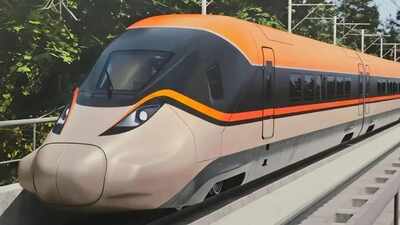
Bullet train project was launched in 2017, ten years later Indian Railways looks to roll out its own Rs 866.87 crore high-speed 280 kmph train by early next year – what makes it specialEven as the cost of the project has nearly doubled, India’s first bullet train project is taking shape with construction work progressing well and the country looking to manufacture its own high-speed train.Not only will the Mumbai-Ahmedabad corridor be India’s first high-speed rail corridor, it will also usher in a new manufacturing advancement for Indian Railways as it works towards rolling out an indigenously designed and developed bullet train.
Indian Railways ‘Make in India’ bullet train
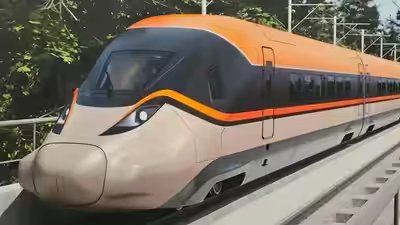
Being called a major engineering feat, Indian Railways is attempting to make a 280 kmph high speed train by early 2027. The rollout timeline for the first prototype is by March 2027 so that it can be tested extensively by RDSO.
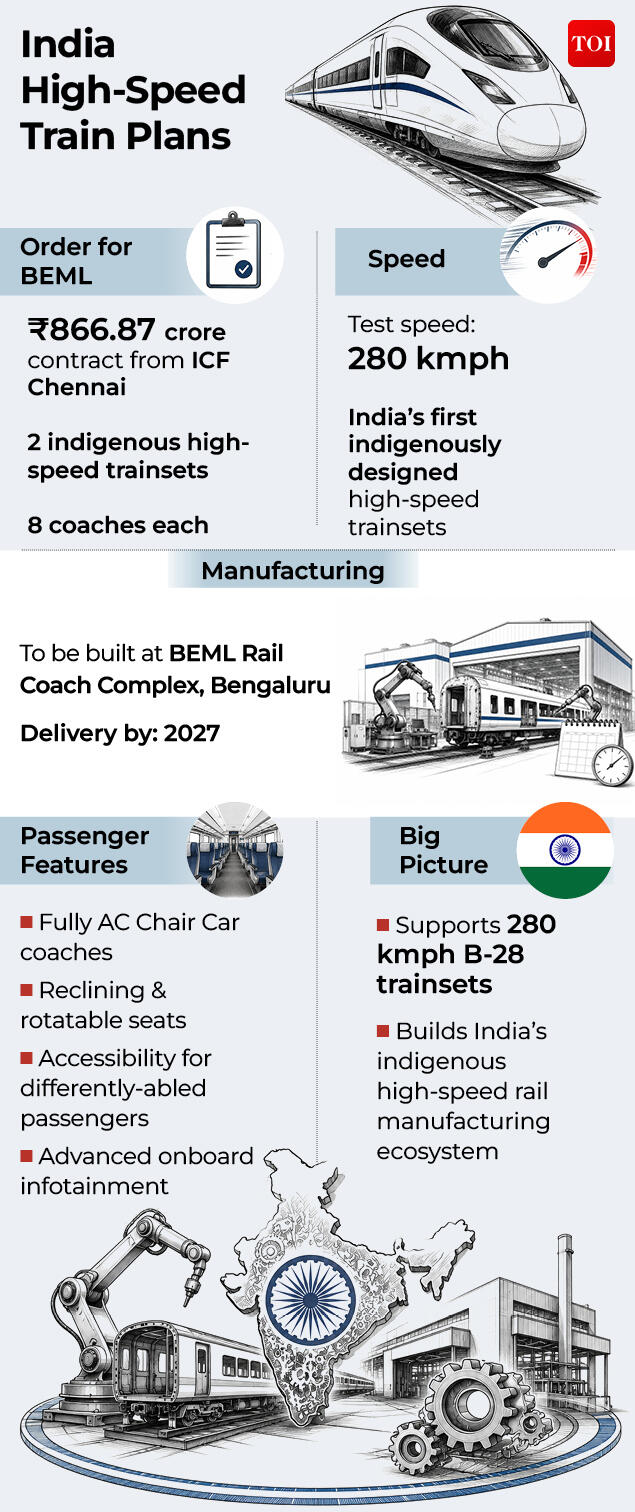
India’s High-Speed Train Plans
India could see the launch of its first bullet train service in 2027, with the Surat–Bilimora section of the Mumbai-Ahmedabad bullet train project expected to become operational by August that year.India’s learning curve in building bullet trains is planned in two stages. The initial trainsets will be designed to operate at speeds of 280 kmph, while subsequent trainsets are expected to eventually have the capability to reach 350 kmph.Integral Coach Factory (ICF), Chennai, has awarded BEML Limited a contract worth Rs 866.87 crore to design, manufacture and commission two prototype bullet train, or high-speed trainsets. The trains will be capable of crossing speeds of 250 kmph, with a design speed of 280 kmph.To support domestic production of the high-speed trains, BEML has established a dedicated ‘Aditya’ High-Speed Rail Complex in Bengaluru for their manufacture.Each of the two trainsets covered by the contract will have eight coaches. Sources told TOI that manufacturing of the train has started.The bullet trains will feature fully air-conditioned chair-car coaches and will be equipped with passenger amenities described as world-class. The trains will also have advanced onboard infotainment systems, along with reclining and rotatable seats. Dedicated facilities for divyangjans will also be provided.Codenamed B-28 train sets, the high-speed trains will be built using advanced precision-driven technologies.Bullet trains operating in countries such as Japan and across Europe are generally designed to function in cold-weather conditions. For the Indian environment, the trains will instead have to be engineered with factors such as heat and dust in mind.At present, Indian Railways plans to manufacture the bullet trains using stainless steel. Railway Minister Ashwini Vaishnaw has already said that the next generation of bullet trains will be developed to operate at speeds of 350 kmph.Sources told TOI earlier that aluminium train sets are being considered for speeds exceeding 300 kmph. Manufacturing such trains in India would mark another first for the country.
Bullet Trains: The Engineering Leap
The bullet train programme has been described by experts as an engineering leap for India because building high-speed trains requires capabilities that are substantially different from those involved in manufacturing the traditional LHB coaches currently produced in the country.Higher speed alone does not define the challenge. The train has to be engineered to maintain a smooth ride while travelling at very high speeds. At the same time, its body must combine strength with low weight, while its wheels and suspension systems need to provide stability and passenger comfort.The train’s control systems also need to operate at a significantly higher level to ensure safety and maintain passenger comfort, including when there are sudden changes in air pressure.For India, developing capabilities in areas such as high-powered motors and the software used to control the train will be crucial. The country will also need to manufacture, or at least critically adapt, advanced braking systems, while developing train designs capable of dealing safely with crashes and moving efficiently through the air.
7 More Bullet Train Corridors
The Mumbai-Ahmedabad bullet train project is only one part of Indian Railways’ broader high-speed rail plans. The Union Budget this year announced seven additional high-speed rail corridors.
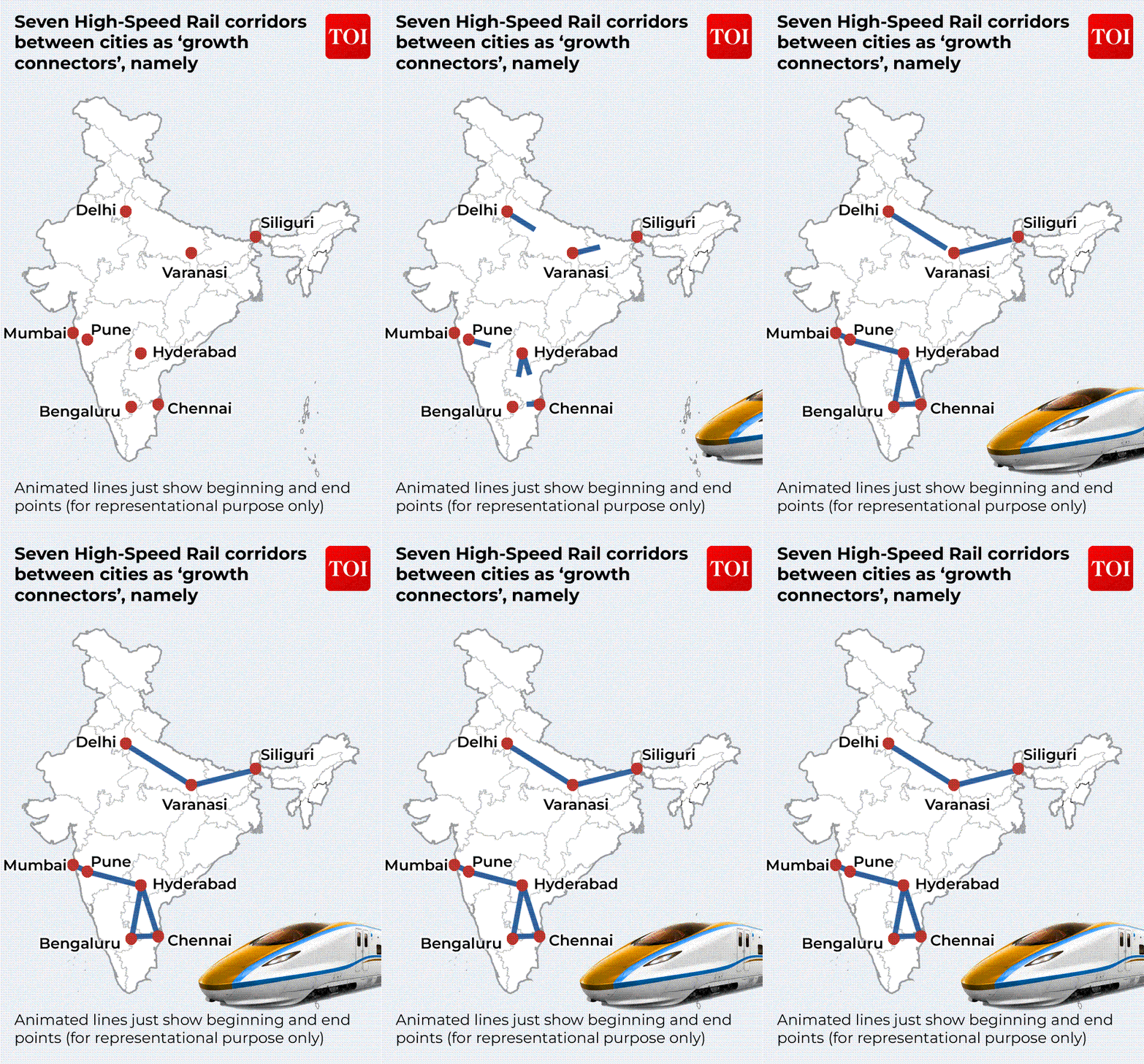
7 more bullet train corridors planned
Developing domestic bullet train manufacturing capabilities could help meet the rolling stock requirements of these proposed corridors in a cost-effective manner.The proposed routes and their stated travel times are Mumbai-Pune (48 minutes), Pune-Hyderabad (1 hour 55 minutes), Hyderabad-Bengaluru (2 hours), Hyderabad-Chennai (2 hours 55 minutes), Chennai-Bengaluru (1 hour 13 minutes), Delhi-Varanasi (3 hours 50 minutes), and Varanasi–Siliguri via Patna (2 hours 55 minutes).