
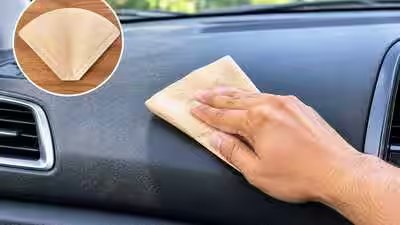
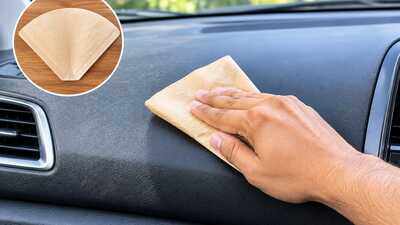
Dust has a way of settling on the dashboard within hours of a wash, and paper towels and old rags often leave lint behind. Car-care experts have a cheap fix that sits in most kitchens: the humble paper coffee filter. It is a dusting tool, not a deep cleaner, and it works best on the right surfaces. Here is what the trick involves and how to use it well.
Why a coffee filter works
Coffee filters are made of densely packed fibres that absorb well and, more importantly, are lint-free. That means they can pick up dust without leaving fibres behind, unlike many rags. They will not scratch delicate areas or leave bits behind the way paper towels can, and their construction lets them trap a lot of dirt without any cleaning solution.
How to use it correctly
Use a clean, dry filter, and wipe gently across the surface the way you would use a microfibre cloth or a chamois. When the filter is full of dust, throw it away and take a fresh one. A pack costs little, and you can keep a few in the glove compartment for quick touch-ups. Open the car doors while you work, so dust has a chance to leave the cabin instead of landing somewhere else.
Surfaces that benefit most
Coffee filters are well suited to delicate areas such as the front panel, dashboard and console. They are also good for door panels, the gear area and other hard plastic or vinyl surfaces that collect fine dust. Some drivers use them on glass for a lint-free finish too, though that tip is more of a driver’s habit than an expert recommendation.
Air vents need a helper
Air vents are dust magnets, and the slats are hard to reach with a flat filter. Suction alone cannot always dislodge dust in such spots, so car-care guides suggest a small brush or a foam-tipped applicator to get between the slats. Loosen the dust first with a soft brush or compressed air, and then wipe the outer louvres and the surrounding trim with a coffee filter.
What it will not do
A coffee filter is paper, so it can tear when wet, and it will not lift stains, grease or sticky spills. For those, a little water and a mild cleaner made for car interiors, applied with a cloth and not sprayed directly onto the surface, is the safer choice. Avoid dashboard sprays that leave a wet or glossy finish, since they can cause glare on the windscreen, and do not use bleach or hydrogen peroxide on interior surfaces.
Disclaimer:
This article is intended for general informational and household purposes only. Results vary with the surface, the amount of dust and the type of filter. Check your vehicle’s manual before using any cleaner, test products on a small hidden area first, and avoid getting liquids into electronics, switches and air vents. Do not clean the interior while driving.