

The National Council of Educational Research and Training (NCERT) has reconstituted the team responsible for preparing new Political Science textbooks for Classes 11 and 12. The new team has been asked to bring greater focus on cultural rootedness, Indian knowledge systems and inclusion while preparing the revised books.The composition of the team has also drawn attention, as at least four members have documented links with the Rashtriya Swayamsevak Sangh (RSS), its student organisation Akhil Bharatiya Vidyarthi Parishad (ABVP), or institutions associated with the organisation. The details were reported by PTI, citing the NCERT notification and publicly available profiles of the members.
Sandeep Shastri to lead textbook development team
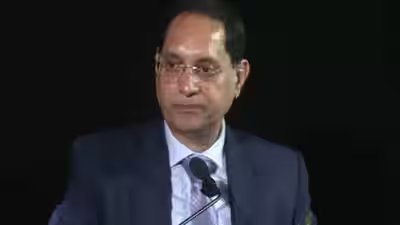
The textbook development exercise will be headed by academic and political analyst Sandeep Shastri, who is the vice president of Karnataka-based Nitte, a deemed university.As per the NCERT notification, the team has been given a deadline to complete the Class 11 Political Science textbook by November this year. The Class 12 textbook is expected to be prepared by July 2027.The exercise is part of the wider textbook revision being undertaken in line with the changes proposed under the National Education Policy (NEP) 2020.
NCERT sets out wider focus for new textbooks
The team includes academics and educationists from institutions such as JNU, Delhi University, IGNOU, National Law University, Chanakya University, Jindal Global Law School, and Pondicherry University.The NCERT notification states that the team will work with curricular groups dealing with social science, languages, Indian knowledge systems, environmental education, and innovative pedagogy. It will also consult other groups to ensure links between different grades and subjects.The revised books will be reviewed for themes such as cultural rootedness, Indian knowledge systems, inclusion, educational technology, and assessment, according to the notification issued by NCERT Director Dinesh Prasad Saklani.The revision of Political Science textbooks is significant because the subject covers India’s Constitution, democracy, political institutions, and citizenship. The new books will therefore be closely watched for how they present India’s political history, constitutional values, and different viewpoints.(With inputs from PTI)