

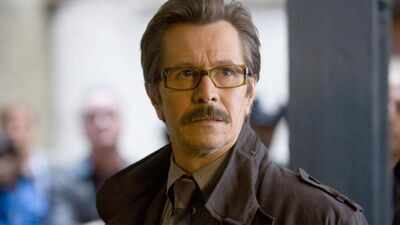
Being good at something is usually the goal. But for Gary Oldman, that was never really enough. Known for giving stellar performances and noteworthy characters from Sid Vicious and Count Dracula to Commissioner Gordon and Winston Churchill, Oldman has a very specific idea about what it takes to become great at something.During an interview with Richard Covington for Salon, published on July 9, 1997, Oldman spoke about teaching acting students and the difference between simply wanting to be good and genuinely wanting to be great. He described that ambition as something that has to come from inside you.Today’s quote of the day by Gary Oldman reads: “Wanting to be a good actor is not good enough. You must want to be a great actor. You just have to have that. It’s not something you can wear like a coat. It’s in you. It’s like a furnace.”
What does the quote by Gary Oldman mean?
Oldman was not simply telling young actors to chase fame. His idea was more about how badly you want to improve at something. In the Salon interview, he described that drive as being like a furnace. You cannot put it on for a performance and take it off afterwards. If the ambition is really there, it becomes part of how you approach the work.That is a pretty useful way of looking at ambition in general.Being “good enough” can become an easy stopping point. You reach a certain level, people are happy with your work, and there is no obvious reason to push yourself further. But if you genuinely want to be great, there is always something else to learn.And Oldman’s own career reflects that restless approach. He has moved between theatre, independent films and huge Hollywood productions, often taking on very different kinds of characters rather than sticking to one safe formula.
How is the quote by Gary Oldman relevant today?
There is nothing wrong with wanting to be good at what you do. But if you are serious about building a career, eventually you have to ask yourself whether you are simply trying to finish something or actually trying to get better at it.That could apply to almost anything. Writing, acting, filmmaking, business, sports or even a college subject. You make something. You look at it. You notice where it could have been better. Then you try again.The internet can make success look very sudden. Someone becomes a successful creator, writer or entrepreneur and it can seem as if they simply got lucky. What is harder to see is all the work that happened before anyone was paying attention. Oldman’s “furnace” is really about that internal push. You cannot fake it forever.
Early life of Gary Oldman
Gary Leonard Oldman was born on March 21, 1958, in New Cross, London. He grew up in a working-class family and developed an interest in acting while he was young.He eventually studied at the Rose Bruford College of Speech and Drama and went on to work extensively in British theatre before making the move into film.Oldman’s early career was not built around glamorous Hollywood roles. He worked with respected British directors and theatre companies, gradually developing a reputation for throwing himself completely into difficult characters. That intensity became one of the things audiences came to associate with him.
How did Gary Oldman rise to fame?
Oldman first gained major attention for playing Sid Vicious in the 1986 film ‘Sid and Nancy’. The role put him on the international radar and showed just how far he was willing to go for a performance.He followed it with roles in films including ‘Prick Up Your Ears’, ‘JFK’, ‘Dracula’, ‘True Romance’ and ‘The Fifth Element’. In the 2000s, a new generation of audiences knew him as Sirius Black in the ‘Harry Potter’ films and Commissioner Gordon in Christopher Nolan’s ‘The Dark Knight’ trilogy.He later won the Academy Award for Best Actor for playing Winston Churchill in ‘Darkest Hour’. But the interesting thing about the 1997 Salon interview is that Oldman was already questioning his own creative drive at the time. He told Covington that he felt the “fire” to act had gone and admitted that acting could sometimes become boring after years of doing it.