


“I ate it and thought, ‘This is something you get only once a year. Why not sell it?’” For 17-year-old Jayanta and his friend Kailash, teenagers from West Bengal, what began with a thought after tasting thekua during Chhath Puja slowly turned into something much bigger- a business they started from home with about ₹20,000.Jayanta and Kailash had known each other since Class 5. Coming from modest families, the two say they had long wanted to build something of their own. “We both wanted to do business. We never really thought about doing a job,” Jayanta said.
Thekua gave them their first idea
But when Jayanta suggested selling it, Kailash was hardly convinced. “I told Kailash, ‘Let’s sell thekua.’ He said, ‘You will eat anything and say let’s sell it. That’s not how it works,’” Jayanta recalled in a podcast on the YouTube channel Satish K Videos.They nevertheless began researching. They looked at traditional Indian snacks, how they were being sold and what they felt was missing. “We realised there was a gap. There are so many traditional snacks, but very few people were thinking about how to take them forward,” Jayanta said.The more they explored, the more they felt there was room for a traditional food that could be available beyond its usual festival season. They eventually launched Shuddh Swad, starting with thekua.And then came the difficult part: actually starting.
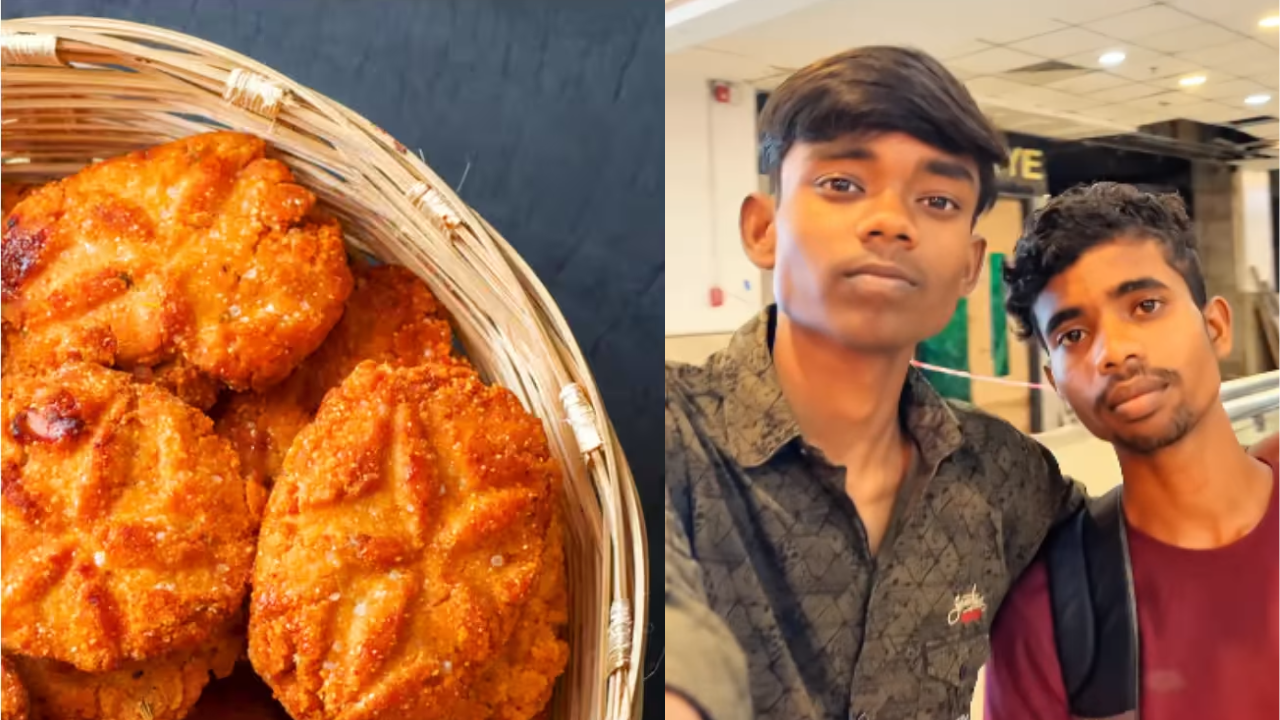
Jayanta and Kailash started the business from home with about ₹20,000.
“We started with ₹20,000”
There was little money left over for things like advertising, so the friends found another way to get people to notice them. “We started with ₹20,000,” Jayanta said. They began making reels- not just promotional videos, but videos about what they were doing, the problems they were facing and their attempts to build something from scratch. “We did not have money for marketing. So we thought, why not use social media?” Jayanta said.Instead of waiting until everything was perfect, they showed people what was happening behind the scenes. “We started documenting our journey. Whatever problem we faced, we would make a video about it.” The approach slowly began bringing people to their page.Within about a year, the founders said during the podcast that they had built an audience of around three lakh followers and crossed ₹50 lakh in sales. According to the co-founders, the venture subsequently grew into a ₹1 crore business.But behind those numbers was a routine that looked very different from the usual image of young entrepreneurs. Kailash, Jayanta recalled, was selling water bottles at a railway station while they were building the business. “He used to wake up at 6am and go to the station to sell water bottles. He would come to my house by around noon or 1pm. Then in the evening, he would go back and sell water bottles until midnight,” Jayanta said.For Kailash, the work was not something he could simply put aside while working on the business. “I had to do both. I had to earn and I also had to work on the business,” he said.The friends continued working around that schedule, gradually learning things they had never been taught- from putting together a website to understanding packaging, food labelling and online sales. “We did not know how to make a website. We learnt it from YouTube and made it ourselves,” Jayanta said. “Whenever we had a problem, we searched for the solution.”They also turned to newer tools. “You have YouTube, you have ChatGPT, you have the internet. If you want to solve a problem, you can find a way.” The business itself went through its share of trial and error. They experimented with packaging and flavours, worked on extending the product’s shelf life and eventually began selling through online marketplaces and quick-commerce platforms.
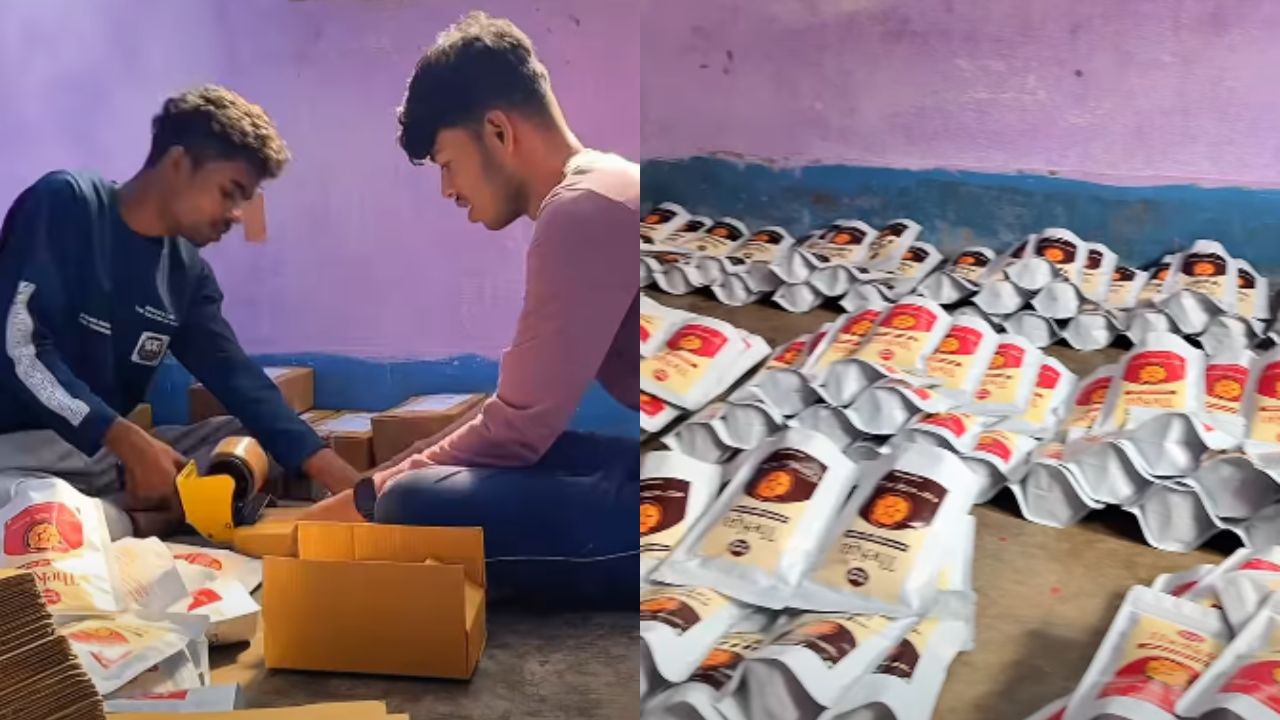
The teenagers made the best use of social media for marketing and advertisement.
Even the product had to evolve based on feedback
“We understood that packaging matters a lot,” Jayanta said, explaining that they eventually worked on changing how the product was presented.Their first major breakthrough came surprisingly early. On their launch day, they say they made around ₹45,000 in sales, largely through people who had been following their journey online.“That day, we were shocked. We did not expect that we would get so many orders,” Jayanta recalled. But the early momentum did not mean everything suddenly became easy.
Competition has never been something to run away from
“Competition will exist only if we are doing something. If I am running alone on an empty road, I won’t know what I am doing wrong,” he said. The two now want to explore other traditional foods from different parts of India, particularly regional snacks that they feel are gradually disappearing.“We want to bring traditional Indian food back. There are so many things that people don’t know about anymore,” Jayanta said. But their biggest takeaway from the experience is less complicated than the business itself.“Just start. Problems will come; fix them and move forward. Become a solution-oriented person.” He also had a message for other young people who spend time on social media.“Use social media properly. Don’t just use it to scroll through reels.” That advice also explains much of their own journey. They did not begin with a large investment or a ready-made business plan. One was still in school; the other was selling water bottles between working on the venture. They learnt things as they encountered them, made mistakes and kept going.And what began with one friend’s family making thekua for Chhath eventually became a business worth ₹1 crore- but, perhaps more importantly, a lesson for two teenagers in what can happen when an ordinary idea is taken seriously.